The Deeper Meaning Behind Coin Checks
There's more to a challenge coin check than you might think.
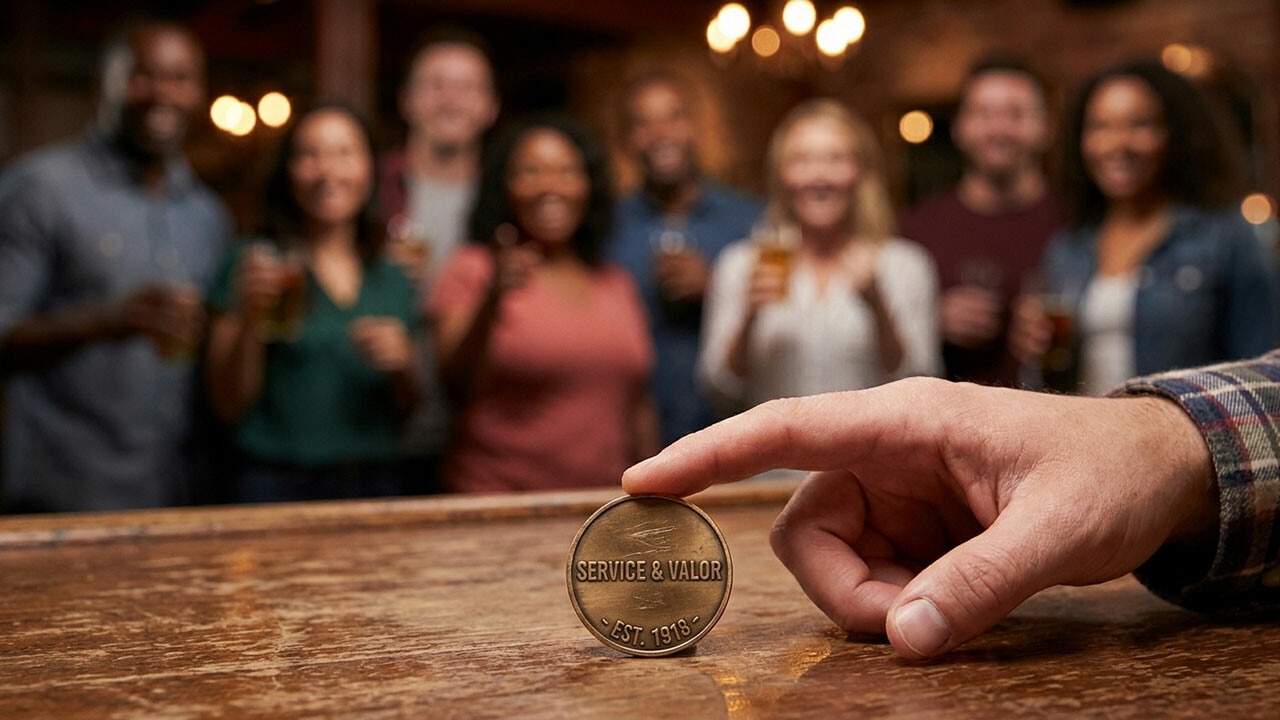
If you’re a fan or collector of challenge coins, you’re familiar with the tradition of the coin check. One person taps their coin on the bar or table, others present theirs, and the last one to produce their coin buys the next round.
It seems like a simple, fun tradition. But there’s more to it than meets the eye. It’s actually a social contract among the group, a voluntary submission to collective accountability.
Say what?
Think about it for a minute. There’s no authority figure such as a boss enforcing the rules of coin checks. No referee to call fair or foul. The whole system is based on the idea the you want to be part of the group enough to accept its rules.
And that’s all the social contract really is: an agreement among members of the group, usually without ever sitting down to formally establish or negotiate them. You learn the rules by watching. You accept them by staying.
More Than a Token
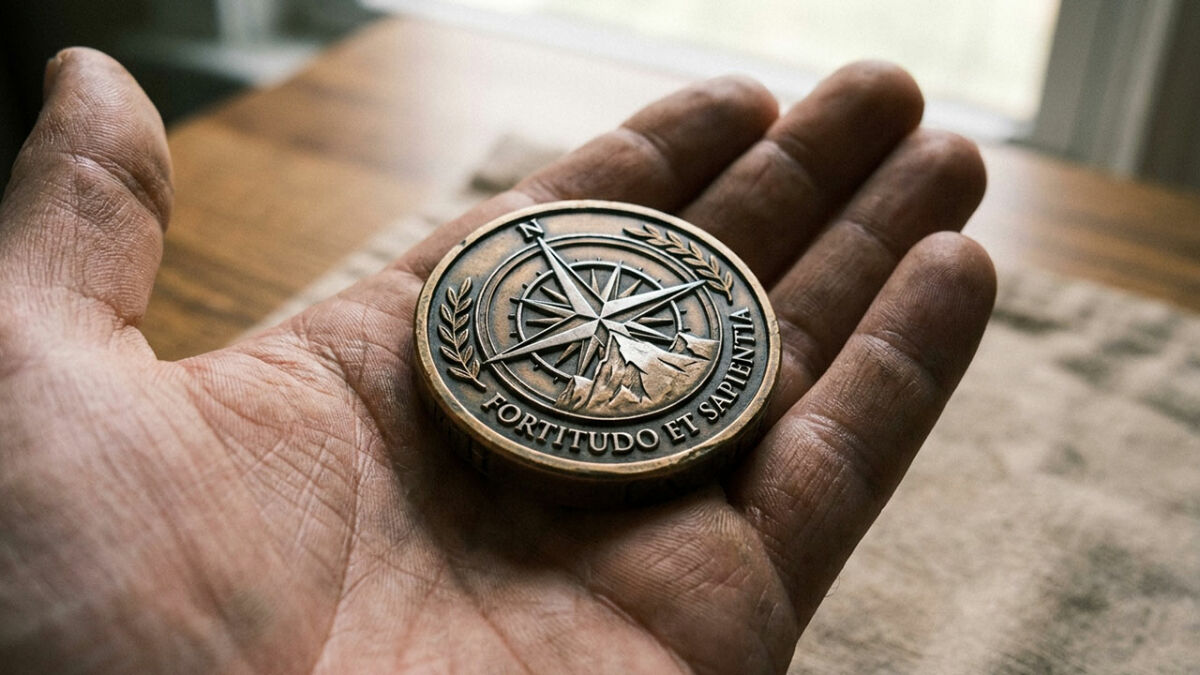
If you’re carrying a challenge coin, it’s not just a simple token. It’s a declaration of membership in the group that issued it. As long as you carry it daily, you’re making a statement that you’re a part of that group, and that their beliefs are your own, at least in part. Whether you’re a member of a specific military unit, a police officer, a firefighter, or of any other group or team, it’s a part of you.
When you stop carrying that coin, you’re saying that group identity is no longer important enough to you to be a part of your life. It’s really all about saying “yes, these are my people.”
The coin check tradition a simple system that shows how trusted groups maintain a cohesive identity without a formal enforcement mechanism. The rules are clear, the consequences are spelled out, members opted in voluntarily, and the penalty for violating them is simply social.
Low Stakes Make It Work
The reason the coin check works as a social mechanism is the fact that it’s low stakes. Losing a check and buying a round may generate some laughter and gentle ribbing, but there’s no real harm. It maintains the camaraderie of the group.
That’s a good thing. While high stakes enforcement of the rules could create frustration and resentment, you can always laugh about a coin check. It builds group identity rather than breaking it. You’re saying “I respect this group enough to submit to the rules.”
What Happens When You Lose a Coin Check
When you lose a coin check, you’re not really being punished for forgetting your coin. You’re reaffirming your membership in the group. When you graciously agree to buy a round, you’re actually saying “Yes, I accept the rules of the group, and I belong here.”
Accepting the consequence gracefully is important. If you complain, make excuses or refuse to pay, you’re signaling that you don’t respect the group rules.
The Challenger’s Responsibility
It’s easy to overlook one aspect of a coin check – the person initiating the check is taking on a social risk too. If you call for a coin check, you’re showing you’re your confident enough in your own standing to do so.
In many groups, if everyone produces their coin, the person making the call buys the next round. Once again, a graceful acceptance is the only way to go. Have a laugh at your bad luck and buy the round. Anything less and you risk damaging the group culture.
Origins of the Coin Check
Coin checks have been an aspect of military life for decades. Some say the challenge dates to post-World War II Germany. American soldiers in the occupied area called for “pfennig checks.” A German pfennig at the time was valued at less than a U.S. penny. Any soldier who could produce a pfennig when challenged was considered too broke to buy a round. As custom challenge coins evolved, so did the practice of coin checks.
Military coin checks can also follow a hierarchy. The higher the rank of the person giving you the coin, the more value it has. If you receive a coin from the Secretary of the Navy, for example, it ranks higher than a coin from a ship commander, so you don’t have to buy.
The ultimate challenge coin is that of the Commander in Chief. If you receive a coin from the President of the United States, you likely won’t ever have to buy a round again.
Beyond the Bar
Coin checks are just one aspect of the idea of voluntary collective accountability. Surfers, for example, follow a unwritten system of etiquette when lining up to catch a wave. Most surfers follow the unspoken rules because they want to be an accepted member of the community. The rules may vary from beach to beach, requiring newcomers to pick them up as they go.
Every group, from fraternities to Freemasons, has its own unwritten rules. The challenge coin check is a modern example of the desire for belonging that is as old as human existence.
A Sense of Belonging

The bottom line is simple: the need to belong is universal. We gather in groups to honor shared history and commitments. Challenge coins and the coin check celebrate belonging, of finding one’s tribe. We willingly accept the unwritten rules and traditions of that tribe, because A) they’re typically low-stakes, and B) because they show our loyalty and standing as a part of it.
You might think we’re reading too much into what’s essentially a drinking game with challenge coins. But the rewards of a coin check can include making lifelong friends and companions far beyond the challenge.
If you’d like to find out more about challenge coins, or want to order custom coins of your own, call us at (855) 272-8451, or email us. If you already have a design in mind, fill out or no-obligation free quote form. We’ll respond promptly with a free digital proof of your design. We look forward to serving all your custom coin needs!
