What is the Difference Between Soft Enamel, Hard Enamel, and Die Struck Challenge Coins?
By the ChallengeCoins4Less Team Updated June 2026
Quick answer
Soft enamel, hard enamel, and die struck coins differ in how—and whether—color is applied. Soft enamel coins have a textured surface with recessed color and raised metal lines. Hard enamel coins are polished smooth and flush for a durable, glass-like finish. Die struck coins use no enamel at all, relying on the natural shine and contrast of the metal itself.
Challenge coins are widely used across various organizations, including the military, law enforcement, and other groups, to honor achievements and build camaraderie. When it comes to selecting the perfect challenge coin, there are three main types to consider – soft enamel, hard enamel, and die struck. This article will help you understand the differences between them and guide you in choosing the most suitable option for your needs.
Soft Enamel Challenge Coins
Manufacturing Process
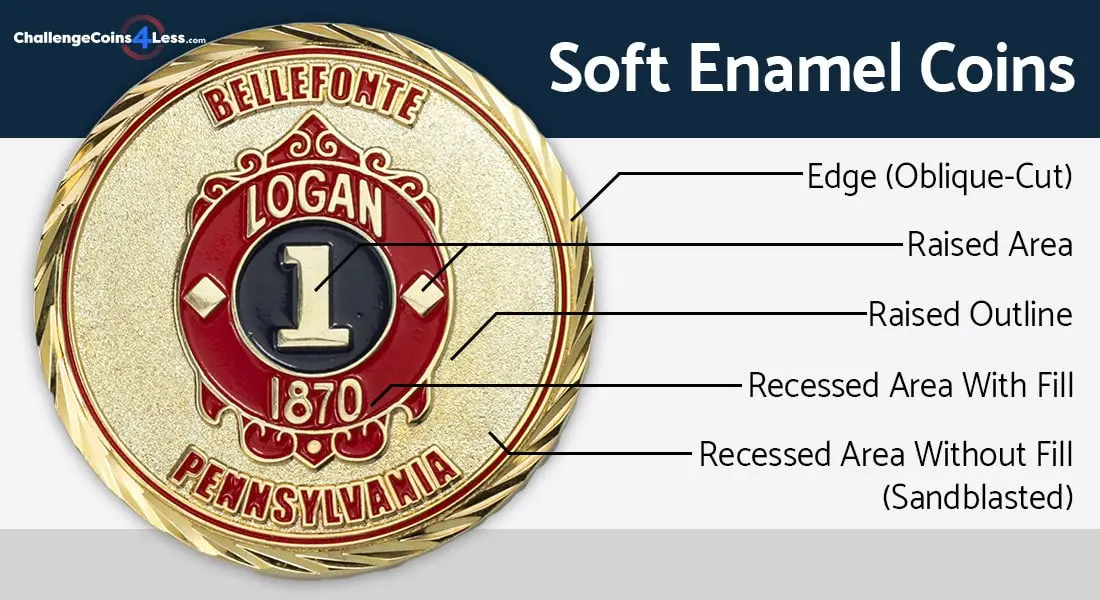
Soft enamel challenge coins are made by pressing a metal die into a blank coin, creating raised and recessed areas that form the design. The recessed areas are then filled with enamel paint, which is baked to harden. After cooling, the coin is polished to remove any excess paint and to reveal the metal lines.
Design and Appearance
Soft enamel coins have a textured surface, with the metal lines separating the colored enamel areas. This creates a 3D effect, giving the design depth and dimension. The enamel colors are vibrant, and the metal lines can be gold, silver, or other plated finishes, adding a touch of elegance to the coin.
Durability and Use Cases
Soft enamel challenge coins are slightly less durable than their hard enamel counterparts, as the enamel can be prone to chipping or scratching over time. However, they still offer a high-quality appearance and are suitable for a wide range of applications, including awards, promotional items, and collectors' items.
Hard Enamel Challenge Coins
Manufacturing Process
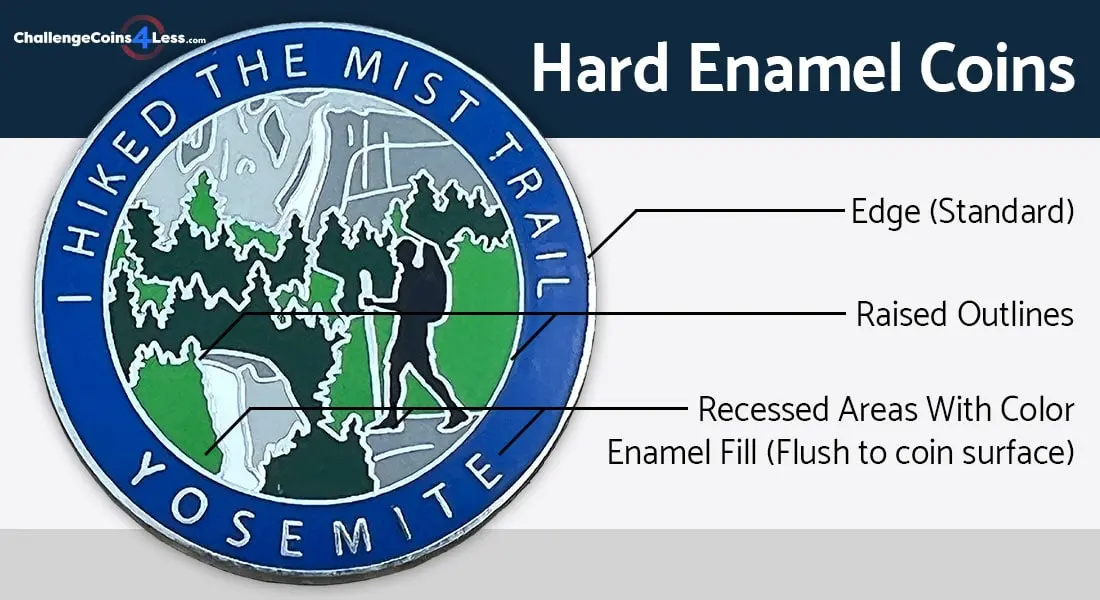
Hard enamel challenge coins also start with a metal die, but the process differs in the application of enamel. The enamel is applied in multiple layers, with each layer being fired at high temperatures to create a hard, glass-like finish. The coin is then polished to a smooth, flat surface, resulting in a durable and glossy appearance.
Design and Appearance
Hard enamel challenge coins have a smooth, flat surface with a polished, glass-like finish. The colors are vibrant, and the metal lines are flush with the enamel, giving the coin a high-quality, sophisticated appearance. These coins often feature intricate designs and are considered the premium option among challenge coins.
Durability and Use Cases
Hard enamel challenge coins are more durable than soft enamel coins due to their hard, glass-like finish, which resists chipping and scratching. Their durability makes them an excellent choice for high-end awards, commemorative items, and collectibles that require a long-lasting, high-quality finish.
Die Struck Challenge Coins
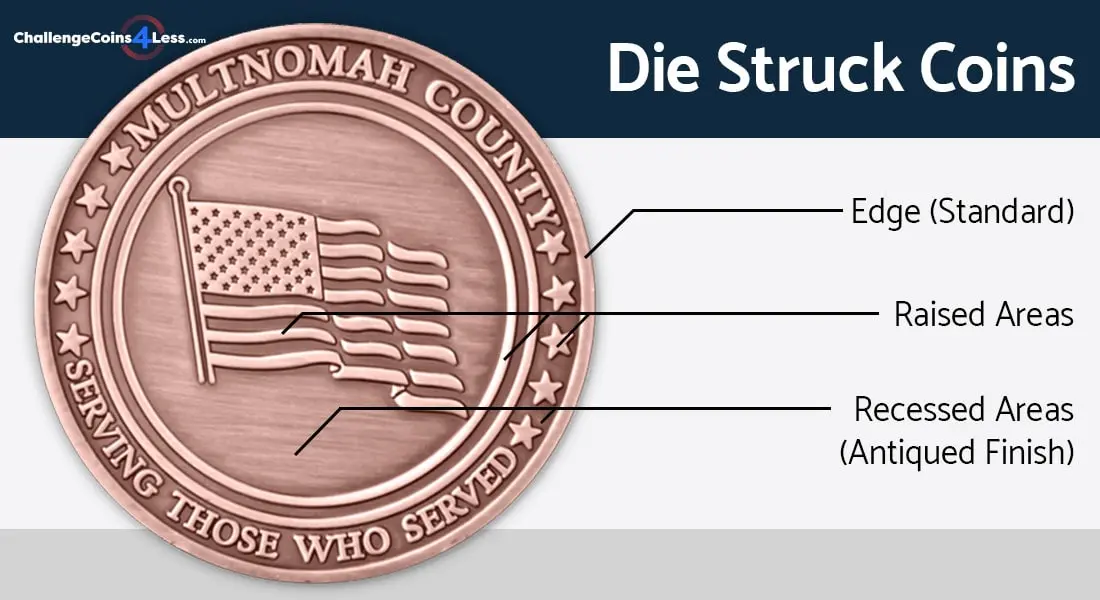
Die struck challenge coins differ from both soft enamel and hard enamel coins in that they do not use any enamel at all. Instead, they rely solely on the metal itself and the raised and recessed areas created during the manufacturing process.
Manufacturing Process
Die struck challenge coins are made by pressing a metal die into a blank coin, similar to the process used for soft enamel coins. However, instead of filling the recessed areas with enamel, the design is left as is, with the raised metal lines and recessed areas creating the coin's visual appeal.
Design and Appearance
Die struck challenge coins have a classic, elegant appearance, with the metal's natural shine and texture serving as the primary visual elements. The coins can be finished with various metal plating options, such as gold, silver, copper, or antique finishes, to enhance their appearance and create a unique look.
Due to the absence of enamel, die struck coins rely on the contrast between the raised and recessed metal areas to showcase the design. This can result in a more subtle, understated look compared to enamel coins, which can be an appealing option for certain organizations or events.
Durability and Use Cases
Die struck challenge coins are highly durable since they do not rely on enamel, which can be prone to chipping or scratching. Their durability and timeless appearance make them an excellent choice for awards, commemorative items, and collectibles that require a long-lasting, high-quality finish. They are also suitable for more formal occasions, where a subtler and more refined design is desired.
Soft enamel vs. hard enamel vs. die struck: side-by-side comparison
Here’s how the three coin types compare across the factors that matter most when you’re choosing a finish for your design.
| Feature | Soft Enamel | Hard Enamel | Die Struck |
|---|---|---|---|
| Surface | Textured—raised metal lines above recessed enamel | Smooth and flat; enamel polished flush with the metal | All-metal raised and recessed areas; no enamel |
| Finish | Vibrant color with a tactile 3D feel | Glossy, glass-like, premium look | Natural metal shine (gold, silver, copper, antique) |
| Color | Enamel fills the recessed areas | Multiple fired enamel layers, polished flush | None—relies on metal contrast |
| Durability | Good; enamel can chip or scratch over time | Highest; hard surface resists chips | Highest; no enamel to chip |
| Best for | Colorful logos, everyday coins, awards | High-end awards, commemoratives, collectibles | Classic, understated designs and formal occasions |
Which type of challenge coin should you choose?
When deciding between soft enamel, hard enamel, and die struck challenge coins, consider factors such as budget, design preferences, and the intended use of the coin. Soft enamel is the most economical choice and shines when you want bold, vibrant color. Hard enamel is the premium option for a smooth, durable, collectible-quality finish. Die struck coins offer a durable, classic, metal-only look without the added cost or potential vulnerability of enamel.
Each option offers unique qualities and advantages, and the right choice will depend on your specific needs, preferences, and budget. Not sure which finish suits your design? Start a free quote and our team will recommend the best option—we don’t charge for art or revisions, so there’s no risk in comparing them.
Support Topics
Production