What is the difference between types of challenge coin finishes or plating?
By the ChallengeCoins4Less Team Updated June 2026
Quick answer
Coin plating is the metal finish applied to your coin. The most common options are gold, silver, copper, and brass , each available polished (bright and reflective) or antique (an aged patina). Other popular finishes include black nickel , dyed solid colors, and rainbow anodized metals—each giving your coin a different character.
There are tons of differences between our plating options that can bring character and class to your coins!
Coin finishes and plating at a glance
| Finish | Look | Best for |
|---|---|---|
| Polished gold, silver, copper, or brass | Buffed to a reflective, jewelry-like glow | A rich, premium, brand-new look |
| Antique gold, silver, copper, or brass | A patina for an aged look | Historic, medal-like designs (antique copper stands in for bronze) |
| Black nickel | Gunmetal grey; looks near-black but reflects like silver | Sleek, modern coins (polished only) |
| Dyed metal | A solid color, such as black | Bold, solid-color finishes |
| Rainbow (anodized) | Multicolor, shifting hues | Eye-catching, anodized-jewelry looks |
What are the standard coin plating options?
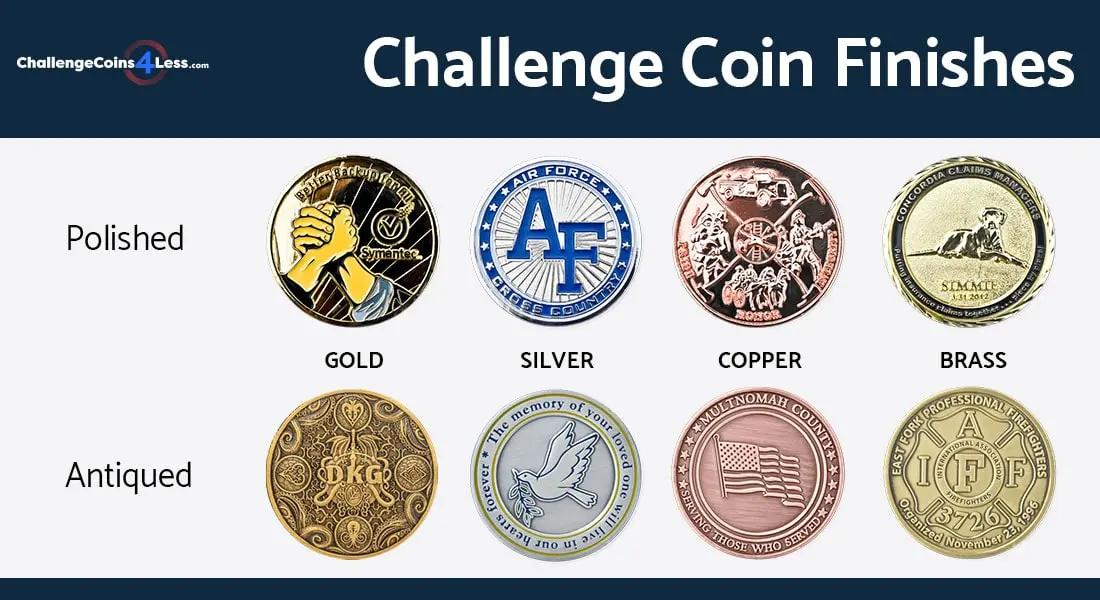
Most coins look best plated in one of our standard finishes: gold, silver, copper, or brass . We offer these in two different styles— polished or antique . Polished coins are plated, buffed, and shined until they’re reflective, giving them a rich, expensive-looking, jewelry-like glow. Antique coins are coated with a patina after plating, conjuring the honor, history, and distinction of an older award or treasure. Both styles can be used in equally effective ways in a coin design.
What’s the difference between polished and antique finishes?
The difference between polished and antique versions of the same plating can be drastic. For example, polished copper looks like a vibrant rose-gold, while antique copper is often used as a stand-in for “bronze” medals.
What is black nickel plating?
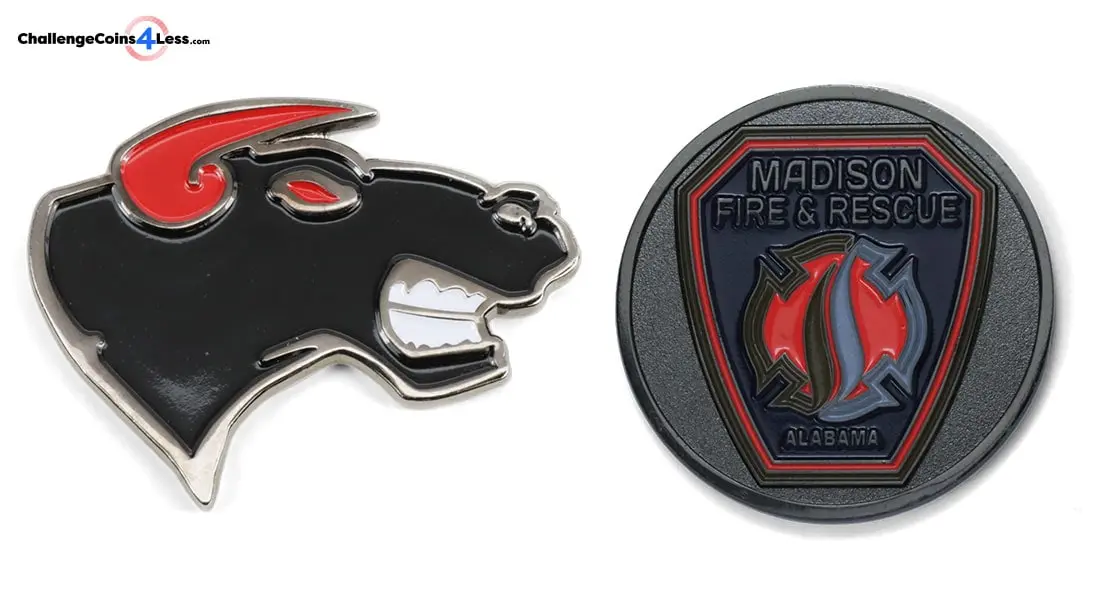
We offer other plating and finishes as well, the most popular being black nickel . This cool, dark metal is really more of a gunmetal grey, and only comes polished in order to capture its unique nature. Black nickel coins can appear almost black, but holding them under direct light reveals they reflect as brightly as silver. That’s how the name black nickel came about, even though they’re really not black or nickel at all!
What are dyed and rainbow metal finishes?
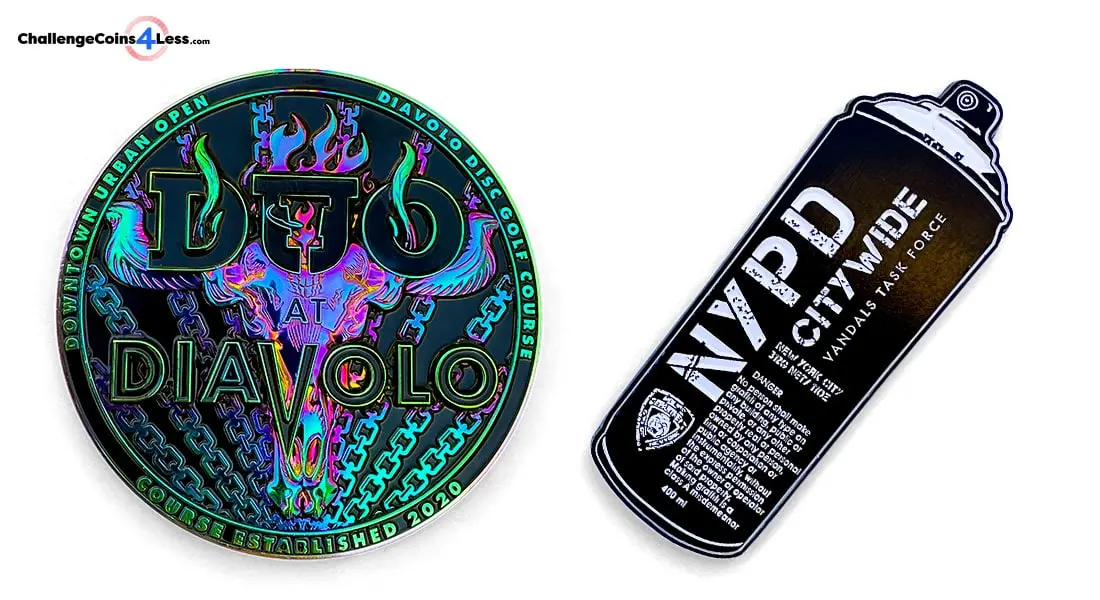
We also provide dyed solid color and rainbow metals , akin to anodized jewelry. For example, some customers who initially requested black nickel have ended up opting for dyed black metal instead, due to it being a more solid-color finish over its counterpart that worked better for their design overall.
How do I choose the right plating for my coins?
Pick a finish based on the look you want—polished for a bright, premium glow, antique for a historic feel, black nickel for a sleek modern look, or dyed and rainbow for bold color. To see a full list of our challenge coin plating options, check out our comprehensive options page . If you’d like an expert opinion on which finish will work best for you, reach out to our sales team or request a free quote .
Support Topics
Product